I must confess that Summer is not my favorite season. Here, in Edenton, North Carolina, we swelter in the heat and humidity. (Our heat index was 124 in June this year!) Gnats and mosquitoes thrive, and our home’s walls reverberate with the sounds of me calling out, “Shut the door! You’re letting mosquitoes inside!” My beautiful garden flowers are beginning to fade while their wild weed cousins remain hardy and take advantage of my lax gardening diligence. As they elbow their way in around my cultivated flora, I shake my head and wait for cooler weather to get outside to pull up and expel the rowdy intruders.
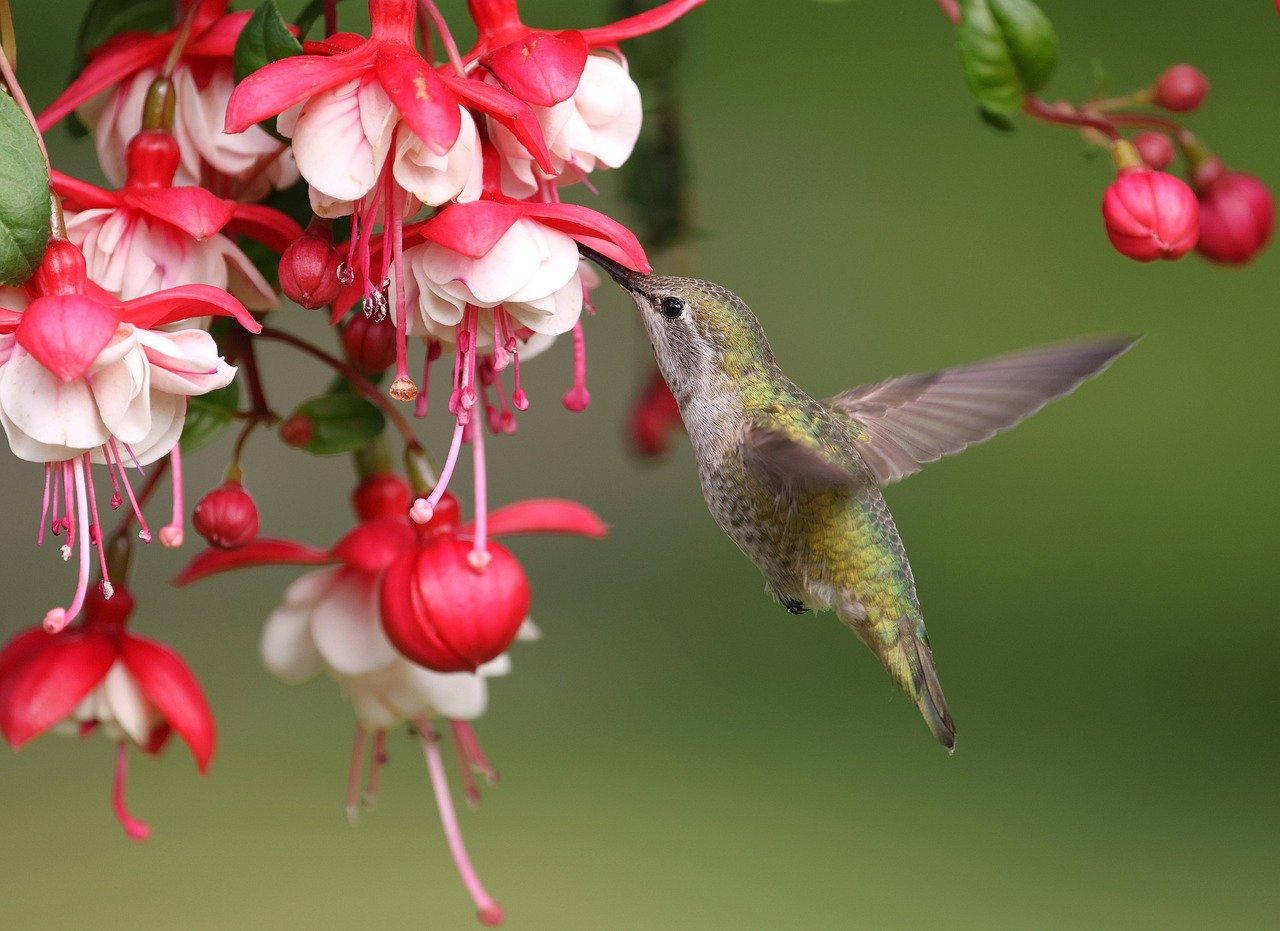
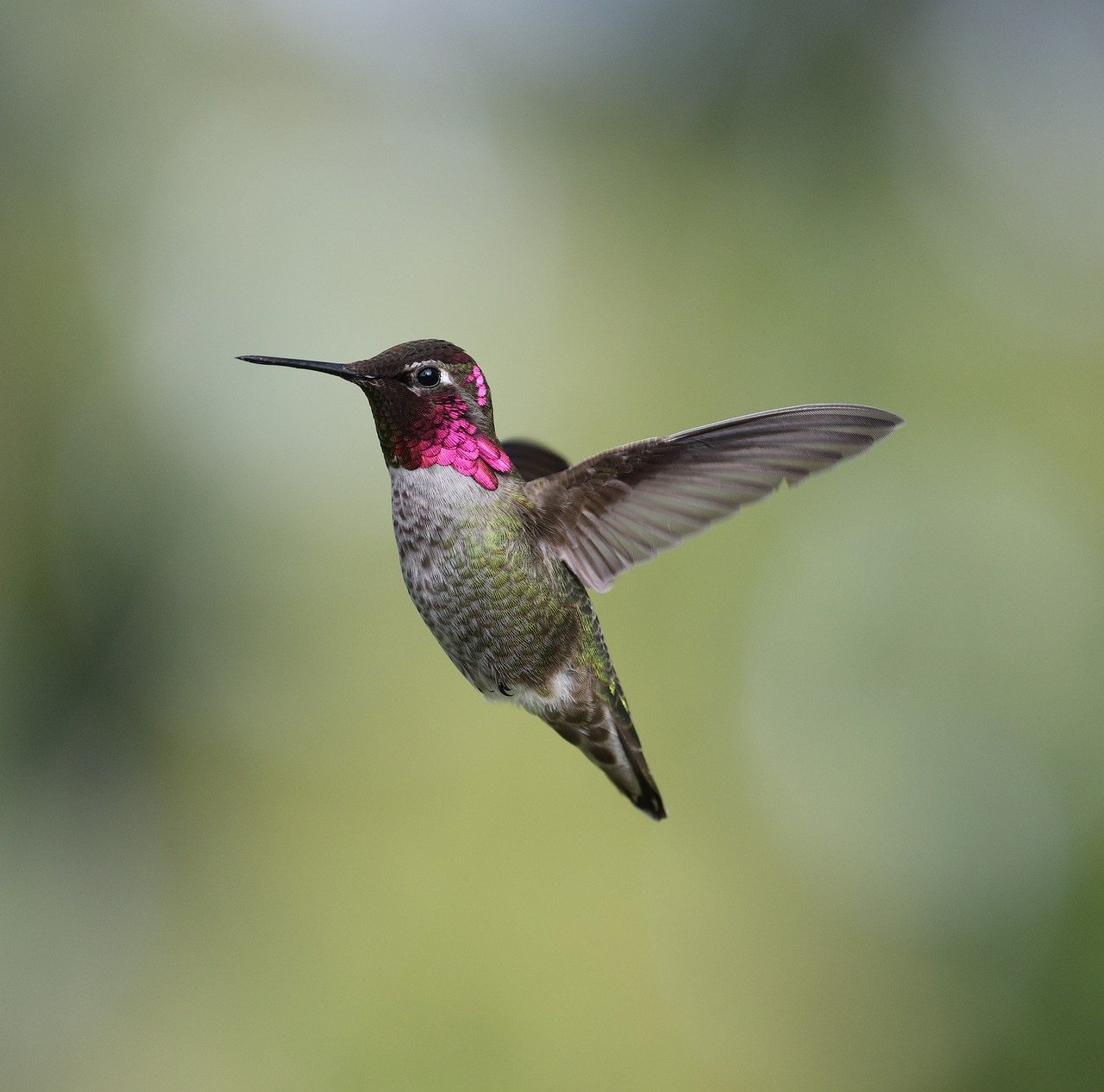
There is, however, a bright side to Summer’s reign—birds! And there is one special bird that only appears in this hottest time of the year: hummingbirds. These beautiful, jewellike birds are so very tiny, yet so very tenacious in their daily lives. I found these amazing facts about hummers at https://www.kaytee.com/learn-care/wild-bird/hummingbird-facts —
- They are the smallest migrating bird. They don’t migrate in flocks like other species, and they typically travel alone for up to 500 miles at a time.
- The name, hummingbird, comes from the humming noise their wings make as they beat so fast.
- Hummingbirds are the only birds that can fly backwards.
- Hummingbirds have no sense of smell. While they can’t sniff out feeders, they do have good color vision. Some birds like the Ruby-throated Hummingbird prefer orange or red flowers. Despite this, red dye should not be used in nectar as it could harm the birds. Instead, plant naturally red or orange flowers or use feeders that have red coloring in their structure.
- The average weight of a hummingbird is less than a nickel.
- Their tiny legs are only used for perching and moving sideways while perched. They can’t walk or hop.
- Hummingbirds drink the nectar found in feeders by moving their tongue in and out about 13 times per second. They can consume up to double their body weight in a day.
- The average number of eggs laid by female hummingbirds is only two. These eggs have been found in nests smaller than a half dollar and compare in size to a jellybean or a coffee bean. Some species, like the Black-chinned Hummingbird make their nests with plant down, spider silk, and other natural resources that can expand as their babies grow after hatching.
- A flock of hummingbirds can be referred to as a bouquet, a glittering, a hover, a shimmer, or a tune.
- There are over 330 species of hummingbirds in North and South America.

I’ll close this homage to hummingbirds with a few lines from Beatrice Ravenel’s 1923 poem, “The Humming-Bird”.
And a humming-bird darts head first,
Splitting the air, keen as a spurt of fire shot from the blow-pipe,
Cracking a star of rays; dives like a flash of fire,
Forked tail lancing the air, into the immobile trumpet;
Stands on the air, wings like a triple shadow
Whizzing around him.
Shadows thrown on the midnight streets by a snow-flecked arc-light,
Shadows like sword-play,
Splinters and spines from a thousand dreams
Whizz from his wings!
Thanks for stopping by. Y’all come back, now!
Kathryn